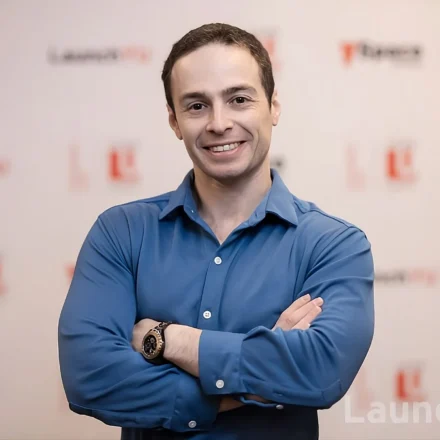
Meet Melissa. She’s a 56-year-old personal trainer in Albuquerque, New Mexico.

Two years ago, she was diagnosed with severe osteoporosis.
One year later, her lumbar spine T-score improved from –3.2 to –1.6. That’s one of the most dramatic reversals I’ve ever seen. Later in this article, I’ll speculate as to why her results were so exceptional.
Here’s what you can expect to learn in this article:
- What Melissa’s life was like before the diagnosis of osteoporosis
- The exercise program that reversed her osteoporosis
- The nutritional changes she made
- The results: how her T-scores changed
- Why I think her results were so exceptional
- How her life is different now that she no longer has osteoporosis.
If you’d like to hear Melissa tell her own story, check out this 5-minute video:
And if you’d like help reversing your own osteoporosis, we have a special program called the “Osteoporosis Reversal Program.” To see whether you qualify for that program, just fill out the application for on our home page. Doing so doesn’t obligate you to anything. It simply sets up a quick, 10–15-minute chat where we chat about your current situation, and see if we can help you. There’s no pressure, no obligation, and no sales pitch.
Melissa’s Life Before
Melissa has a long background in project management, but she was always passionate about fitness, so concurrently, while working as a project manager, she got a personal training and group fitness instruction certification. Nowadays she does both.
As you can expect from such a high-energy person, she loves physical activities that make her feel alive. That’s skiing and mountain biking for her.
You can imagine how her favourite activities were interrupted when she was diagnosed with osteoporosis. Skiing and mountain biking are activities that are serious no-nos when someone has osteoporosis, because the fracture risk is so high. So she stopped those for fear of breaking a bone.
The diagnosis was somewhat of a surprise. The reason that I say “somewhat” is because on the one hand, she was already quite fit, exercised 4+ days per week and was on Hormone Replacement Therapy (HRT) for 2 years before her diagnosis. On the other hand, her mom and sister also had osteoporosis, so it does run in her family.
When she was first diagnosed, in 2024, her T-score in the lumbar spine was -3.2, and in her femoral neck was -2.8 (that one is mild-moderate osteoporosis). In addition to a DEXA scan, she also got a different test done called the “Trabecular Bone Score” (or TBS), and it showed partial degradation of the part of the bone called the “trabecular bone.”
When she was first diagnosed with osteoporosis, she felt like her doctor tried to scare her, explaining that in the not-too-distant future, she’d lose her mobility/independence. The recommended treatment was medications, which she didn’t want to try as a first-line approach.
She came across my first osteoporosis book on Amazon, read it cover-to-cover, took everything to heart, and designed her own exercise program. I only found out about it after she had already successfully reversed her osteoporosis.
Melissa’s Exercise Program
Here are the highlights of Melissa’s exercise program:
Exercise Selection
We know from Wolff’s law that bones only get stronger at the very spot that muscles pull on them hard enough. As an example, although one of the quadriceps muscles attaches to the hip, the entire hip doesn’t get stronger when you work the quads. Only the spot where the quads attach to the hip gets stronger. A bone typically has multiple muscles attaching to it. So if you want to strengthen the entire bone, you have to use multiple exercises that work the various muscles that attach to that bone.
And that’s what she did. She used multiple exercises, like:
- Sumo squats: These work the muscles of the quads, but with a greater glute involvement. The glutes attach to both the pelvis, as well as the upper part of the thigh bone. So when you work them adequately, you improve the T-scores of the femoral neck and total hip.
- Deadlifts: these work the hamstrings, glutes, and lower back. It’s one of the few exercises that improves the T-scores in the “big 3” areas: lumbar spine, total hip and femoral neck.
These are just a couple of examples of using exercise to target the specific sites where T-scores are the lowest. There was more to her program, but these illustrate the principle of exercise specificity.
Progression
In her own words, Melissa said “When I turned 50, I told myself I didn’t need to lift heavy weights. I just need to be strong enough to be able to do old lady physical activities.” That all went out the window once she was diagnosed with osteoporosis. Previously, progress wasn’t a major feature of her exercise programs.
Now, progress is the centrepiece of her programs. She has an objective marker of when to increase the weights – if she can do more than 3 reps past her limit, it’s time for an increase. Notice that she uses an objective marker – 3 reps. Not something subjective, like “I’ll wait until this weight feels easy.” If you rely on your feelings, you’ll be stuck forever. Because feelings lie. So, my friend, ignore your feelings, and use an objective marker of when it’s time to progress. And with advice like “ignore your feelings”, I’m now opening up my therapy practice. If you want to get on the waiting list, let me know 😉
By the way, there’s more to progress than just increasing the weight (although that’s one of the most potent ones for osteoporosis). Melissa would also change the angle, or change the tempo.
Balance Exercises
Fracture risk is made up of 2 components:
- If you fall, how likely are you to break a bone (this is affected by things like bone density, bone quality, bone microarchitecture and bone strength).
- How likely you are to fall to begin with.
A lot of people forget the second half of that equation. Not Melissa. She deliberately included balance exercises into her routine. If you want some example of balance exercises for osteoporosis, I have a complete video about that here.
Exercise Frequency
In one of my other articles, I explain the model of “exercise as medicine.” To briefly recap, for a medication to work, it needs to be:
- The right medication
- At the right dosage
The same is true for exercise. For it to work for osteoporosis, it needs to be:
- The right type of exercise (strength training, but more specifically, the appropriate exercise selection).
- The right dosage. When it comes to strength training, dosage is determined by weight/resistance, number of days per week, number of sets and reps.
Most people who do strength training for osteoporosis underdose. Not Melissa. She does strength training a minimum of 4 days per week. Sometimes, when she substitutes for other group fitness instructors, it could be more than 4 days per week.
Number of Sets and Reps
As I explain in my various articles, the term “strength training” is as broad as the term “shoes.” Within the broad category of shoes, you have running shoes, slippers, sandals, stilettos, boots, etc. The same is true for strength training – there are many different kinds. But really only a couple kinds of strength training are effective for osteoporosis. So most people doing strength training for osteoporosis are surprised that their bone density worsens, even though they’re doing what they think is right.
Research clearly shows that difficulty is not what makes bones stronger – appropriate loading is. If you use a weight that’s light enough to complete 13 repetitions, it’s too light.
Melissa uses weights that she can lift from 3-12 times.
Another part of exercise “dosage” is the number of sets. It’s not enough to do one or two sets of an exercise. Melissa does 3-4 sets if she goes up to 12 reps, and more sets if she uses heavier weights.
Jumping
Jumping is a very low time investment (50-100 jumps only take 5-10 mins.), and yet, a relatively potent stimulus for bone strength. And as the famous LIFTMOR study showed, jumping is indeed safe for people with osteoporosis, on condition that they haven’t had a recent fracture. If the fracture already healed, jumping is perfectly safe, as long as you get into it progressively, and don’t just go straight into the most advanced jumps on your first day.
But even within the broad category of jumping, not all jumps are created equal. You have to jump high enough (so skipping rope, jumping on a trampoline, or jumping in the water doesn’t work), for enough jumps, and the right number of days per week. Jumping up and down, as well as forward and back is more potent for the T-scores of the lumbar spine and total hip. Jumping laterally is more potent for the femoral neck.
Melissa included all kinds of jumps, to stimulate the various different sites. She jumped 50 times per day, 3-4 times per week (every other day).
Melissa’s Nutritional Changes
Melissa was a lifelong vegetarian, and when she analyzed her diet, realized that her diet is, in her words, “woefully inadequate” in some nutrients for osteoporosis.
So she made some deliberate changes to get her nutrition up to par, especially:
- Increasing her protein intake.
- Increasing her calcium intake (from food, not supplements). Yeah, you might already know my stance on calcium, but hey, I’m not her personal trainer, and given the results she achieved (we’ll cover that in the next section), I’m not going to argue against what she did.
- Increasing her intakes of vitamins C, D and K (from food, not supplements).
Melissa’s Results
After all that buildup, how have her T-Scores changed? As I mentioned earlier, the best I’ve ever seen:
- Her lumbar spine was -3.2 when she was first diagnosed. One year later, it was -1.6 (yes, -1.6. That’s not a typo).
- Her femoral neck was -2.8 when she was first diagnosed. One year later, it was -1.9.
- Her trabecular bone score when she was first diagnosed was partially degenerated. One year later, it was normal.
Given that the diagnostic criterion for osteoporosis is -2.5, she essentially reversed her osteoporosis, and now only has osteopenia. Most importantly, though, is her fracture risk, which is now significantly lower than just a year earlier.
Why Melissa’s Results Were So Exceptional
Like I said, I’ve never seen improvements like these before. Most of the time, in a 1-year span, I expect to see improvements of 0.3-0.5 in someone’s T-scores, and 0.5-1.2 in a 2-year span. Melissa’s results blew it out of the water. While this is only speculation, why do I think her results were so fast, and so large? There are four possible reasons that I can think of:
- Perhaps she’s a hyper responder. In any given population, there’s a small segment that just responds extremely well to it. Maybe that’s Melissa.
- Her exercise frequency. Most studies on exercise for osteoporosis use 2-3 days per week (the LIFTMOR study used 2 days per week). There’s not a single study at the current time looking at the effects of strength training 4+ days per week. Maybe that had something to do with it.
- She took an injectable peptide called “CJC-1295.” It’s intended to get the body to release more growth hormone. However, there’s not a single study examining its effects on osteoporosis (or its risks when taken long-term). Maybe it’s more potent than we know, or maybe it had nothing to do with it. Without isolating variables, we don’t know.
- A lot of women who are diagnosed with osteoporosis are scared to lift heavy and progress. But both research, and our own massive experience with osteoporosis clients shows how safe it is. Melissa has no fear of lifting heavy, and progressing quickly.
How Melissa’s Life is Different Now
How’s Melissa’s life different now that she no longer has osteoporosis, and she’s a lot stronger? Dramatically.
- The activities that she gave up when she was first diagnosed (skiing and mountain biking) – she’s doing them again.
- No more fear of being brittle and breaking her bones. She’s still cautious, but no longer anxious about it.
- It even had a positive impact on her business. She now teaches osteoporosis group fitness classes at the community centre she works at in Albuquerque.
Overall, even though she’s not my client, I’m still very proud of her for how much effort she put in to reverse her osteoporosis, and the T-scores show it. If you want help with your own osteoporosis, we have a special program called the “Osteoporosis Reversal Program.” To see whether you qualify for that program, just fill out the application for on our home page. Doing so doesn’t obligate you to anything. It simply sets up a quick, 10–15-minute chat where we chat about your current situation, and see if we can help you. There’s no pressure, no obligation, and no sales pitch.