Meet Ann. She’s a 68-year-old retired veterinarian, and she had a bad skiing accident that caused her to tear her ACL (one of the knee ligaments). And of course, she had her ACL reconstructed surgically.
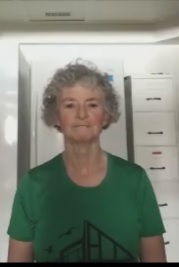
Ann West
Following that surgery, she of course went to physiotherapy. While it was helping her at first, she reached a point where she was stuck. If she was sedentary, her recovery – although incomplete – would have been good enough. But Ann wasn’t sedentary. She was very active. So for her purposes, she’s reached the limit of what physiotherapy can do, and decided to start working with us to regain full function.
And regain it, she did. In fact, not only did she regain full function, she became stronger than before the accident. How did she do it? That’s exactly what we’ll talk about in this article. But if you want to hear it straight from Ann, check out this 8-minute video:
If you’d like help with your own knee pain (even if nothing else has worked), we have a special program called “The Knee Pain Reversal Program.” To see whether you qualify for this program, just fill out the application form on our home page. Doing so does not obligate you to anything. It simply sets up a quick, 10-15-minute chat where we discuss your situation, and figure out whether we can help you. There’s no pressure or sales pitch.
Ann’s Life Before
Ann loved being active. As you read earlier, she’s a skier, curler (a true Canadian!), kayaker, and even a group fitness instructor.
So when she had her skiing accident in 2021, she diligently went to physiotherapy, and gradually restored her function. But not fully.
For about a year and a half after the surgery, despite having completed physiotherapy, she was still extremely hesitant to ski (in fact, at one point, she told her trainer, Meagan, that she’s swearing off skiing), and when she curled, she’d have knee soreness for a few days afterwards.
She didn’t like that. She knew that physiotherapy had done all it can do, but there were still these limitations, and reminders that her knee wasn’t perfect yet.
A couple of years before that, she had seen my ad in Zoomer, subscribed to my newsletter, and had been getting it ever since. She’s also read lots of our client case studies, like:
- How Stellis eliminated her knee pain in 8 workouts, at age 82
- How John reversed his diabetes and reduced his knee pain
- How Warren eliminated his IT band pain in 2 weeks
…and others.
So she reached out to me, explaining her situation. We chatted, and set her up with her personal trainer, Meagan.
Ann’s Exercise Program
I’m a fan of precision in exercise prescription. We don’t have a generic “knee pain” program, because a generic program will get generic results:
- Some people will improve
- Some people will worsen
- Some people will be unchanged
Assessments allow us to personalize each client’s exercise program. So during Ann’s initial assessment, Meagan identified the differences between her healthy knee, and her bad knee. So we had a model and a target of what Ann had to get back to.
There were obvious strength deficits between the good side and bad side. There was also an obvious range of motion difference between the good knee and bad knee.
Knowing these details (and others), Meagan was able to craft a program for Ann that restored full function to the injured side.
Ann’s Exercise Program
A common mistake that people (professionals included) make when trying to rehab knees is myopically looking at the knee, and only the knee. Only 1 muscle gets trained: the quads (the front of the thigh). They ignore basic anatomy (and logic): that there are a lot more muscles surrounding the knees, like:
- The hamstrings (the backs of the thighs)
- The adductors (the inner thighs)
- Calves (behind and below the knee)
- Tibialis anterior (the muscle on the front of the shin)
Besides that, when a joint is injured, it doesn’t just affect that one joint. It also affects neighbouring joints. So the muscles surrounding the hips also need to be strengthened. That’s a truly comprehensive knee rehab program.
And Meagan addressed all those, with exercises like:
…and others.
Of course, there are a million different exercises for each of those muscle groups. Why did Meagan specifically choose these ones? I elaborate on the 6 criteria for exercise selection in this thorough, 10-minute video.
Ann’s been with us for almost 2.5 years now, so this is just a snapshot of one of her programs. She’s had multiple programs over her time with us.
Furthermore, if you just read about the exercises, you’d miss the “secret sauce” of the exercise program – the progression model, and the workout-by-workout adjustments that were made based on Ann’s progress from the previous series of workouts, energy/fatigue levels, and more. After all, no exercise program should be a static program, where you’re doing the same exercises for the same weights, sets and reps every single time. An exercise program should be dynamic, intelligently, purposefully, and systematically changing the exercise variables to move the client forward… as opposed to haphazardly changing the program whenever you feel like it, without rhyme or reason… like a lot of personal trainers do.
Ann’s Results
Ann’s results were nothing short of phenomenal. After only 6 months of working with Meagan, she had a follow-up appointment with her surgeon, and he was seriously impressed!
- She had great range of motion (ROM) almost everywhere.
- Her ROM in the squat almost resembled her pre-injury range of motion. Since then, her ROM has completely normalized in the squat.
- He even told her that she had great thighs, and to keep doing what she’s doing.
Besides that, her legs are now equal in strength. Someone trying to examine her legs would never know she had a knee injury, or which knee was injured.
She also has better balance, which she notices during curling and skiing. Plus, her fear of falling is a lot lower.
In addition to that, her “gym strength” is much improved.
- She went from doing 1-legged deadlifts with no weight, to now, 25 pounds.
- She went from squatting with a partial range of motion to a full range of motion, to split squats with no weight, to split squats with 20 pounds, and goblet squats with 47.5 pounds.
Challenges Along the Way
Ann’s success is that much more impressive, considering the challenges that she’s encountered along the way.
- In April 2024 (about 5-6 months after she started working with us), she was diagnosed with osteopenia. She found a great time to get diagnosed, because well… bone strength is a huge specialty of ours, having written 2 books on the topic.
- In November of 2024, she had a bad car accident, and fractured both her right hand (in multiple places) as well as her sternum.
But Ann’s no quitter. Her previous recovery from the knee injury taught her resilience, and she applied the same kind of effort to recovering from the car accident.
How Ann’s Life is Different Now
How’s Ann’s life different now that she’s pain-free, stronger and has better balance?
- Of course, her knees are now completely pain-free and symmetrical. Nothing is off limits. She can curl, exercise, and do whatever she wants.
- Despite thinking she’d give up skiing forever, she’s back to skiing!
- She’s now better at skiing than before the accident. Just recently, she took a small tumble on her skis, and was able to get back up without taking off her skis.
- Psychologically and emotionally, she feels like she’s gained resilience. If she can bounce back from a bad knee injury and a car accident, it opens up a lot of possibilities for her.
- In addition to all of her other activities, Ann is an avid cyclist. Previously, when she’d do long rides (over 80 km), she’d finish with a sore back. This year, she finished all her rides without a sore back, and less fatigue.
- And a HUGE one for people her age: she can get off the ground without using her hands!
Overall, we’re very proud of Ann, her work ethic and grit. As mentioned earlier, if you’d like help with your own knee pain (even if nothing else has worked), we have a special program called “The Knee Pain Reversal Program.” To see whether you qualify for this program, just fill out the application form on our home page. Doing so does not obligate you to anything. It simply sets up a quick, 10-15-minute chat where we discuss your situation, and figure out whether we can help you. There’s no pressure or sales pitch.