Meet Victoria. She’s a 56-year-old IT project manager at a major bank. Just two months ago, her hip pain was so severe that it woke her up throughout the night and made walking difficult. She had tried rest. She had tried physiotherapy. She stretched constantly. Nothing seemed to provide lasting relief.
Today, that pain is gone.
How did she do it? That’s exactly what we’ll cover in this article. We’ll go over:
- Victoria’s life before the hip injury
- What she’s tried when she first got the hip pain (and how well it worked)
- The exercise program we used with her to get rid of her hip pain
- The results she achieved
- Obstacles she faced along the way
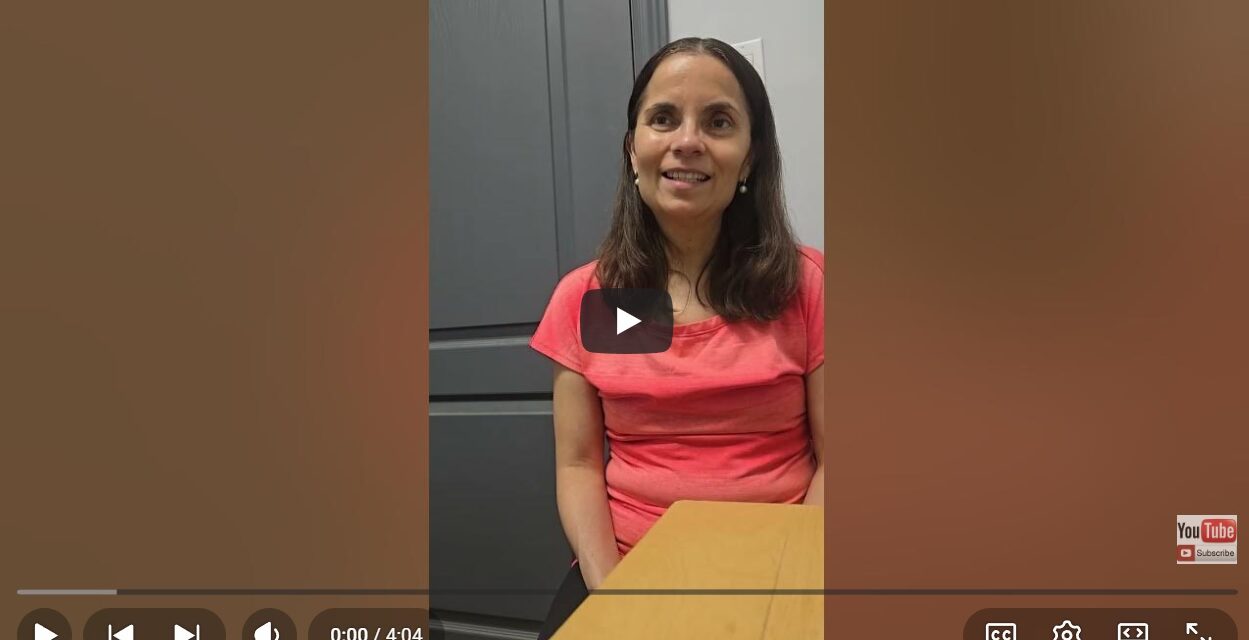
If you’d like to hear Victoria tell her own story, check out this 4-minute video:
And if you want help with your own hip pain, we have a special program called “Happy Hips.” To see whether you qualify for that program, just fill out the application form on our home page. Doing so will set up a short, 10-15-minute call, where we’ll chat about your current situation, and see whether we can help you. There’s no obligation, pressure, or sales pitch.
Victoria’s Life Before the Hip Injury
Before the hip injury, Victoria used to do YouTube exercise videos, 3-4 times per week for 30 minutes.
Eventually, her hip flared up. What started as an annoyance became a major problem. Her pain reached 10/10. Sleeping became difficult. Walking became difficult. Her leg became progressively stiffer. Everyday activities started revolving around her pain.
What Victoria Has Tried to Improve Her Hip Pain
Usually, when someone hurts, the initial approach is simply to not make it worse. Just rest, and hope it goes away.
That didn’t work. In fact, rest made it worse. Her hip needed the proper movement. Not immobility.
When rest didn’t work, she went to physiotherapy for 2 months. And immediately after her appointments, her pain would get better, but wouldn’t last very long. It would always come back. This is one of the most frustrating situations people find themselves in. You start to wonder whether you’ll ever solve the problem permanently.
It even got to a point where she was stretching her hip every hour. Clearly, that didn’t work, or else, the pain would get better permanently, and she would no longer have to keep stretching.
Fast forward a while, and she’d been getting my newsletter for about a year by that time, and after all those approaches didn’t work, she contacted me, I set her up with her personal trainer, Deanna, and they got to work.
But it wasn’t without hesitations. She did have a couple of major hesitations before starting to work with us:
- Price. Personal training ain’t cheap (although we do have lower-priced options for different budgets).
- That her pain would get worse. Understandable, since lifting weights is how she ended up in this predicament in the first place.
Victoria’s Exercise Program
When designing an exercise program for bursitis, we have to understand what causes bursitis in the first place.
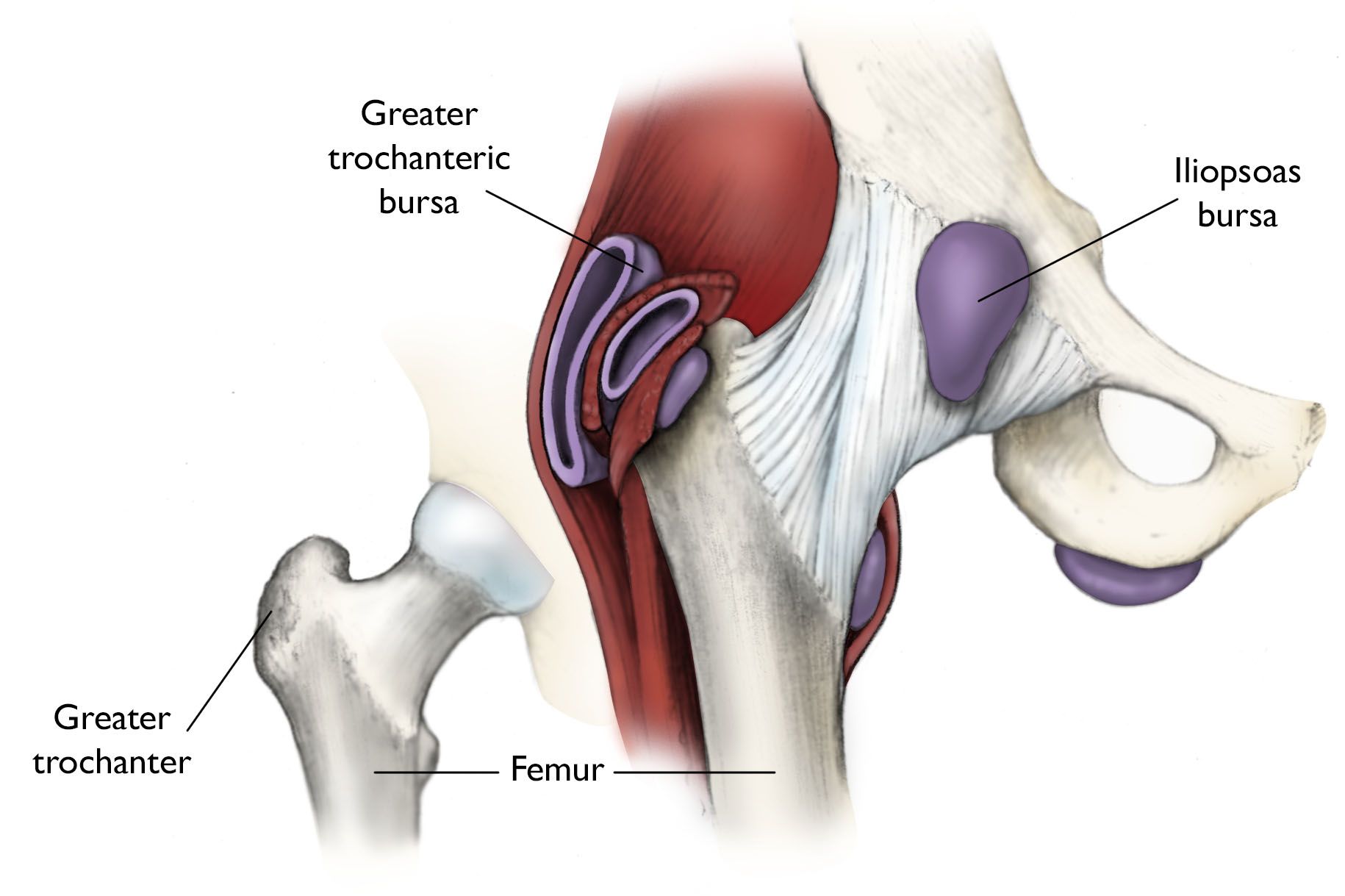
It used to be believed that bursitis is the inflammation of the bursa (after all, that’s where the name comes from). A bursa is a fluid-filled sac that reduces friction between bones, muscles, and tendons that are near joints. Here’s what it looks like. I say, “used to be”, because the modern understanding of bursitis is different (it might necessitate a name change in the future). It’s now believed that the symptoms of bursitis are more to do with the degeneration or irritation of the tendon of the glute (for the sake of terminology, a tendon connects a muscle to a bone).
Once we understand the pathology, and what structures are involved, we can devise a plan to improve it, using the methodology that I outlined in my article, Why Your Overuse Injuries Are Taking So Long to Heal.
Here are the highlights of Deanna’s exercise program for Victoria:
- Banded side kicks. We often talk about the glutes as if they’re one muscle. They’re not. They’re actually 3 different muscles, with different functions. There’s the gluteus maximus, gluteus medius and gluteus minimus. All 3 need to be strengthened for complete recovery. Banded side kicks work predominantly the gluteus medius.
- Squats and deadlifts: to work the gluteus maximus in a “real world” way. One of the problems with physio exercises is that they look good on the therapy table, but then, you live your real life, and those exercises haven’t carried over. The goal is to train muscles the way you actually use muscles. Squats and deadlifts have a great carryover to everyday life, because they replicate real-world motions.
- Hip lifts and rotation. When we walk, the glutes have to stabilize the pelvis. But if we only do symmetrical exercises in the gym, the carryover to real life isn’t as good (because walking is inherently asymmetrical). Hip lifts with rotation simulate that glute contraction with an asymmetric pelvis.
- Lateral bends: these work the obliques (the sides of the abs). The obliques help stabilize the pelvis during walking. And if someone walks a lot with an unstable pelvis, it contributes to the ongoing irritation of the glute tendons.
- V sit hold: These work the main ab muscle (rectus abdominis), which is also a pelvic stabilizer.
These are just some of the highlights of Victoria’s program. There were more exercises besides those.
Furthermore, if you just read about the exercises, you’d miss the “secret sauce” of the exercise program – the progression model, and the workout-by-workout adjustments that were made based on Victoria’s progress from the previous series of workouts, energy/fatigue levels, and more. After all, no exercise program should be a static program, where you’re doing the same exercises for the same weights, sets and reps every single time. An exercise program should be dynamic, intelligently, purposefully, and systematically changing the exercise variables to move the client forward… as opposed to haphazardly changing the program whenever you feel like it, without rhyme or reason… like a lot of personal trainers do.
Victoria’s Results
So with this exercise program, what results did Victoria achieve? Exactly what she set out to do: complete pain elimination. None. Zero. As if it never happened. The pain is complete history. Every movement she does is now pain-free.
She can sleep through the night. She can walk comfortably. She can sit or stand for hours without pain.
Besides the pain reduction, she’s also experienced impressive improvements in her strength:
- Her deadlifts improved from 20 pounds, up to 45 pounds. So her glutes and lower back are considerably stronger now.
- She went from being unable to squat with weight at all to squatting 15 pounds comfortably.
- Her lat pulldowns improved from 32 pounds, up to 42 pounds, so she has more upper body strength.
And this is all in approximately a 2-2.5 month span.
Exercise Dosage
In my article on exercise as medicine, I explained how a huge part of the “treatment” is using the right dosage. The same is true for strength training.
When it comes to exercise dosage, it contains a few important details:
- The appropriate weight/resistance. Not too light and not too heavy.
- The appropriate number of reps.
- The appropriate number of sets.
- The appropriate number of days/week.
Choose a dosage that’s too low, and you won’t improve. Choose a dosage that’s too high, and you risk worsening the injury. That’s a major reason why so many physiotherapy programs don’t work (not to say that all of them don’t work but exercise is often seen as an afterthought, and not the most potent part of the treatment, which it usually is). Physiotherapists are working under the mistaken assumption that exercise selection is the most important variable. It certainly is an important variable, but the right exercises, at the wrong dosage won’t get the job done.
Part of the art and science of therapeutic exercise is appropriate dosing.
Victoria’s Obstacles
Success for Victoria wasn’t exactly a straight line. She’s a mother, a wife, and an IT project manager. There were plenty of obstacles.
- Like many professionals, Victoria wasn’t sitting around with endless free time. She works more than a standard 40-hour week. Between work, family responsibilities, and everything else life throws at you, she only had time for 30-minute workouts on her own. But consistency beats perfection. A 30-minute workout is better than a 0-minute workout.
- Besides the main complaint that she came to us for (hip bursitis), she also had knee pain during squats. Deanna modified the squats, so that Victoria could do it pain-free.
- Due to weak abs, Victoria also had poor posture. With some direct postural work, and ab strengthening, her posture improved.
Despite these obstacles, Victoria has been able to achieve complete pain elimination, postural improvement, and strength gain.
If there’s one lesson from Victoria’s story, it’s that pain doesn’t always improve with rest.
In fact, the right movement is often exactly what injured tissues need.
The challenge is figuring out which exercises to do, how much to do, and how quickly to progress them.
That’s where most people get stuck.
If you’ve tried rest, stretching, physiotherapy, massage therapy, chiropractic care, or other approaches and you’re still struggling with hip pain, it may be time for a different strategy.
We have a special program called “Happy Hips.” To see whether you qualify for that program, just fill out the application form on our home page. Doing so will set up a short, 10-15-minute call, where we’ll chat about your current situation, and see whether we can help you. There’s no obligation, pressure, or sales pitch.